Cardiology · Kumaraswamy Layout, Bengaluru
Coronary Angiography in Bangalore
A test in our on-site cath lab that shows whether the heart's arteries are narrowed or blocked, done when your cardiologist advises it.
 NABH accredited
- All major insurance accepted
- Cashless & CGHS
- 24x7 emergency
Cardiac Diagnostics at Vasavi Hospitals
Cath Lab
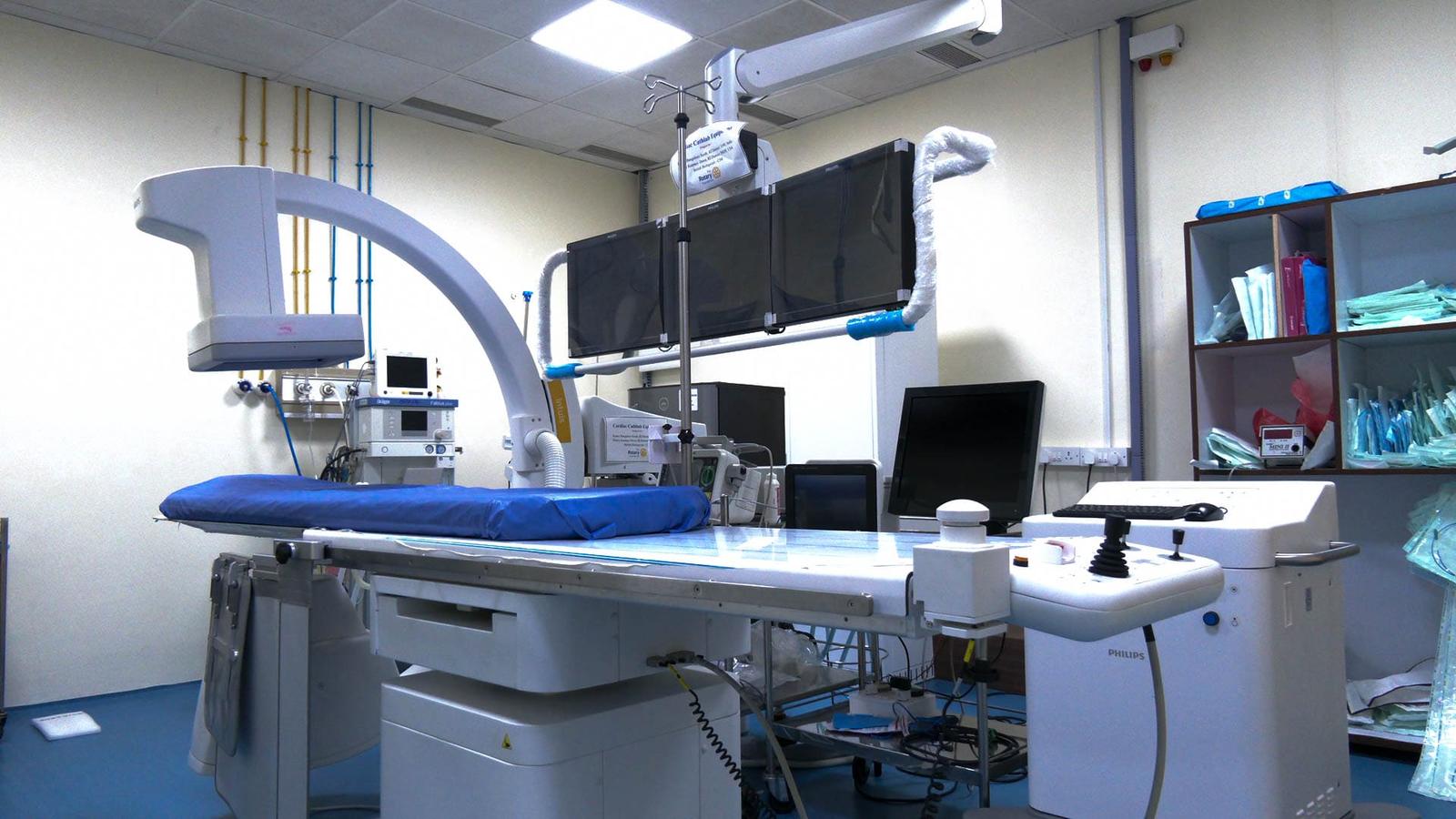
Cardiac Cath Lab On Site
NABH
Accredited Hospital
What is Coronary Angiography?
Coronary Angiography is a diagnostic procedure that helps visualize the arteries supplying blood to your heart. It is performed to detect blockages, narrowing or other abnormalities that may lead to chest pain or heart attacks.
At Vasavi Hospitals, our cardiologists perform this test in the cardiac cath lab using catheter-based X-ray imaging. This test plays a key role in diagnosing coronary artery disease and planning the right treatment, such as angioplasty or bypass surgery.
If you experience chest discomfort, breathlessness or a history of heart disease, speak to our specialists to know if a Coronary Angiography is right for you.
Know the Signs. Choose the Right Test.
Heart disease often develops silently, showing symptoms only when the condition becomes serious. At Vasavi Hospitals, we perform Coronary Angiography to detect heart blockages early and help prevent complications.
When is Coronary Angiography Recommended?
- Chest pain (angina) or shortness of breath
- Abnormal ECG or stress test results
- History of heart attack or coronary disease
- Unexplained chest discomfort or dizziness
- Evaluation before cardiac surgery or angioplasty
Test Options
At Vasavi Hospitals, Coronary Angiography is performed as a catheter-based procedure in a cardiac cath lab. A thin tube (catheter) is inserted through the wrist or groin artery and contrast dye is injected to capture clear X-ray images of the heart’s arteries. Like any invasive procedure it carries some risks, which your cardiologist will explain before you consent.
Insurance-Covered Packages
Cashless insurance options are available. Cost estimates are available before your test.
Get a Callback
Meet Our Surgery Specialist

Dr. Krishna Kumar B. R
MBBS, Diploma in Clinical Cardiology
Cardiologist
17+ Years Experience

Dr. Balaraj
MBBS MD DNB DM Cardiology

Dr. Balakrishna G T
MBBS | MD General Medicine, DM Cardiology
What to Expect During Coronary Angiography
Your Step-by-Step Care Journey
Consultation & Evaluation
Meet our cardiology team for an initial assessment. We review your symptoms, ECG and other test results before deciding if angiography is needed.
Procedure Day
The procedure is performed under local anesthesia. A thin catheter is inserted through the wrist (radial artery) or groin (femoral artery) and a contrast dye is injected to highlight the arteries. The entire test usually takes 20–30 minutes. Like any invasive procedure it carries some risks, which your cardiologist will explain before you consent.
Post-Procedure Observation
After the test, you’ll be monitored for a few hours. Most patients can go home the same day unless further treatment is required.
Results & Follow-Up
Your angiography results are reviewed by our cardiologists, who will discuss the findings and suggest a treatment plan - whether it’s medication, angioplasty or surgery if needed.
Coronary angiography: a guide for patients
Coronary angiography is an X-ray test of the heart’s own blood vessels, the coronary arteries. A special dye makes these arteries visible on the screen. Your cardiologist can then see if an artery is narrowed or blocked, where, and by how much, and plan treatment.
- Anaesthesia
- Local anaesthetic; you stay awake
- Access
- Through the wrist or groin
- Test time
- Usually 30 to 60 minutes
- Hospital stay
- Usually a few hours; sometimes overnight
Why is coronary angiography done?
Your cardiologist may advise it when:
- You have chest pain, pressure or tightness (angina) that suggests narrowed heart arteries
- A treadmill test (TMT), echo or CT coronary angiography shows a possible problem
- You have had a heart attack, to find the blocked artery and open it if needed
- You need heart valve surgery or another heart operation, to check the arteries first
- You have breathlessness or heart failure, and blocked arteries could be the cause
Coronary angiography or CT coronary angiography?
Both tests look at the heart arteries, but they are done differently and used for different needs.
| Coronary angiography (cath lab) | CT coronary angiography | |
|---|---|---|
| How it is done | A thin tube (catheter) is passed from the wrist or groin to the heart, and dye is injected | A CT scan, with dye given through a vein in the arm |
| Treatment in the same sitting | Possible: a blockage can be treated with angioplasty if advised and agreed | No: it is a test only |
| Usually advised when | Symptoms or tests strongly suggest a blockage, or after a heart attack | The doctor wants to rule out or check for blockages in a lower-risk patient |
| Time in hospital | Usually a few hours; sometimes an overnight stay | No stay; you go home after the scan |
Before the test
- Tell your doctor about all your medicines, especially blood thinners and diabetes medicines. Do not stop any medicine unless your doctor tells you to.
- Tell the team if you have had a reaction to contrast dye or iodine, or if you have kidney problems.
- Blood tests (such as kidney function and blood count) and an ECG are usually done.
- You will be asked not to eat for a few hours before the test. Follow the time your team gives you.
- Bring your previous reports and come with a family member.
- You will be asked to sign a consent form. It may include angioplasty, in case a blockage needs treatment during the same test.
During the test
You stay awake. The skin at the wrist or groin is numbed with a local anaesthetic, and you may be given medicine to help you relax.
A thin tube is guided to the heart arteries and dye is injected while X-ray pictures are taken. You may feel a warm feeling when the dye goes in. This passes in a few seconds.
The test itself usually takes about 30 to 60 minutes.
After the test
- If the wrist was used, a tight band is kept on for a few hours and loosened step by step.
- If the groin was used, you will need to lie flat for a few hours so the artery seals.
- Drink plenty of fluids, unless your doctor has limited your fluids. This helps flush out the dye.
- Many people go home the same day. Some stay overnight, especially if angioplasty was done.
- Avoid lifting heavy weights with that arm or leg for a few days. Ask your doctor when you can drive.
- Bleeding or swelling at the wrist or groin that does not stop with firm pressure
- The arm or leg becomes cold, pale, numb or painful
- Chest pain, breathlessness, sweating or fainting
- Fever, redness or discharge at the puncture site
Are there any risks?
Serious problems are uncommon, but every procedure has some risk. Your cardiologist will explain them before you agree to the test. Possible risks include:
- Bruising or bleeding where the tube was put in
- An allergic reaction to the dye
- An effect on kidney function, more likely if the kidneys are already weak or you have diabetes
- An irregular heartbeat during the test
- Rarely, damage to the artery, a heart attack or a stroke
Understanding your results
The report shows which arteries are narrowed and how much. Your cardiologist will explain it and discuss the next step.
This may be medicines and lifestyle changes, angioplasty with a stent, or bypass surgery (CABG). The choice depends on the number and position of the blockages, your symptoms and your other health conditions.
Frequently asked questions
Is coronary angiography painful?
You stay awake and the skin is numbed with a local anaesthetic. Most people feel only pressure where the tube goes in and a brief warm feeling when the dye is injected.
How long does coronary angiography take?
The test itself usually takes 30 to 60 minutes. With preparation and observation afterwards, plan for most of the day at the hospital.
Can I go home the same day?
Many people go home the same day. Your doctor may advise an overnight stay if angioplasty was done or if you need closer observation.
Can angioplasty be done during the angiography?
Yes, if a blockage needs treatment and you have agreed to it beforehand, angioplasty can often be done in the same sitting. Sometimes the doctor advises doing it later or recommends a different treatment.
Should I stop my medicines before the test?
Do not stop any medicine on your own. Your doctor will tell you which medicines, if any, to pause, such as some blood thinners or diabetes medicines.
Is coronary angiography covered by insurance or CGHS?
Coverage depends on your policy. Our insurance desk checks your policy and CGHS eligibility before the test.
This information is for general awareness. It does not replace a consultation; your doctor will advise what suits you.