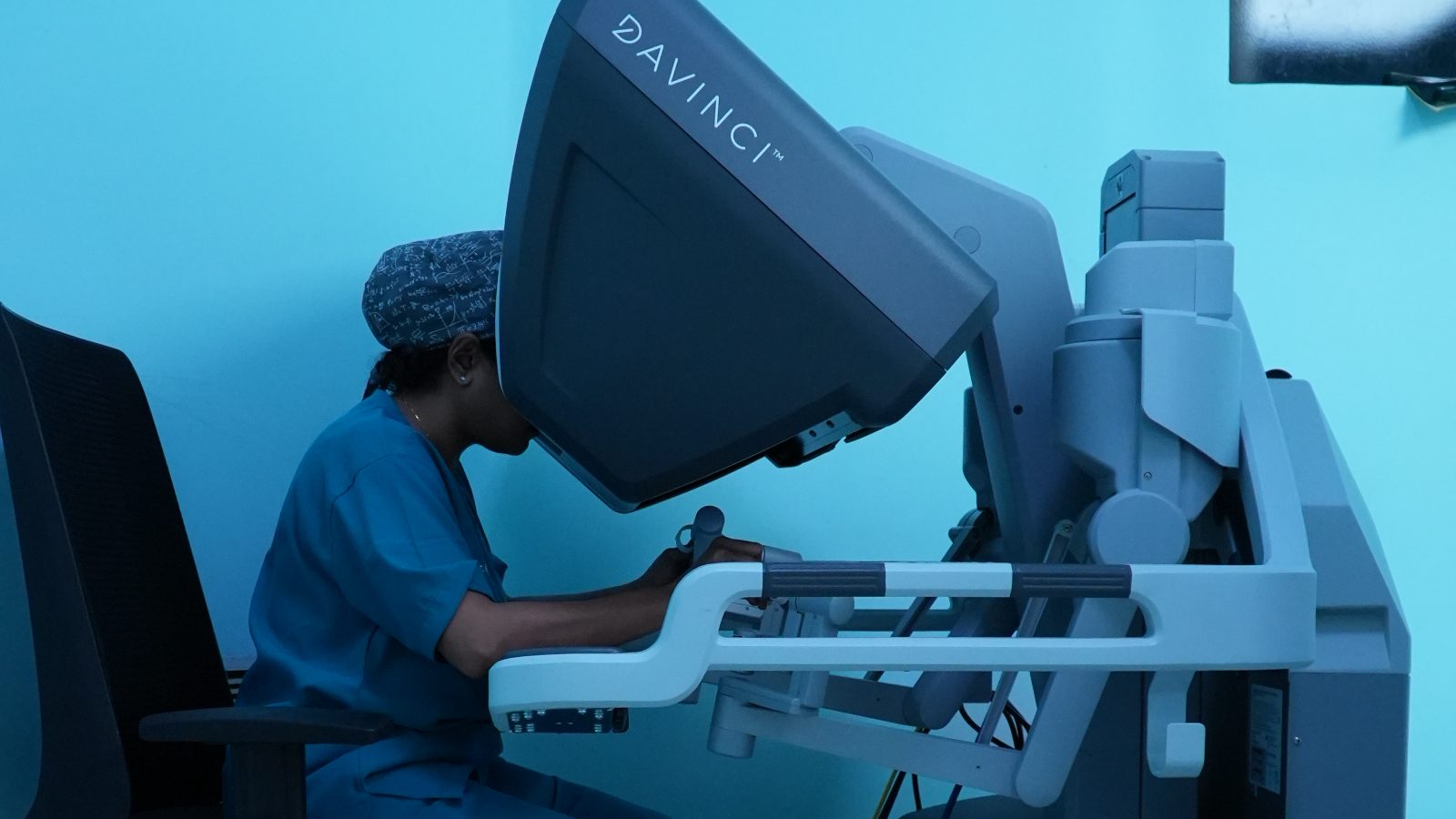
Gynaecology · Kumaraswamy Layout, Bengaluru
Hysterectomy Surgery in Bangalore
Laparoscopic and robotic-assisted hysterectomy, advised for conditions such as fibroids, endometriosis or heavy bleeding when other treatment has not helped.
 NABH accredited
- All major insurance accepted
- Cashless & CGHS
- 24x7 emergency
Hysterectomy Care at Vasavi Hospitals
Robotic
Laparoscopic & Robotic-Assisted Options
NABH
Accredited Hospital
What is Hysterectomy?
A hysterectomy is a surgical procedure to remove the uterus. It is usually recommended for women experiencing conditions such as fibroids, abnormal uterine bleeding, endometriosis, chronic pelvic pain orcertain types of uterine cancer. Depending on your condition, the surgery may also involve removing the cervix, ovaries orfallopian tubes.
At Vasavi Hospitals, our gynaecologists perform laparoscopic and robotic-assisted hysterectomy through small incisions.
If you’re experiencing persistent pelvic pain, heavy bleeding or fullness in the lower abdomen, meet our specialists for the right diagnosis and treatment.
Know the Signs. Choose the Right Care.
Many women ignore early symptoms of uterine problems until they start affecting daily life. At Vasavi Hospitals , we help you find the cause and discuss the treatment options suited to you.
Common Symptoms
- Heavy or irregular menstrual bleeding
- Persistent lower abdominal or pelvic pain
- Pressure or fullness in the lower abdomen
- Difficulty passing urine or bowel movements
Surgery Options
At Vasavi Hospitals hysterectomy is performed using laparoscopic and robotic-assisted techniques through small incisions. Your gynaecologist will advise which approach suits you.
Insurance-Covered Packages
Cashless insurance options are available, and cost estimates are shared before surgery.
Get a Callback
Note: Robotic surgery refers to robotic-assisted surgery. It is not performed by robots. All procedures are performed by our surgeons.
Meet Our Surgery Specialist

Dr. Nisha Buchade
Gynecology, Robotic & Laparoscopic Surgery
15+ Years Experience
Robotic vs. Laparoscopic Surgery: What's the Difference?
Both are minimally invasive. Robotic-assisted surgery offers a 3D magnified view and wristed instruments; laparoscopic surgery uses a 2D view and straight instruments and is long-established. Your gynaecologist will advise which suits you.
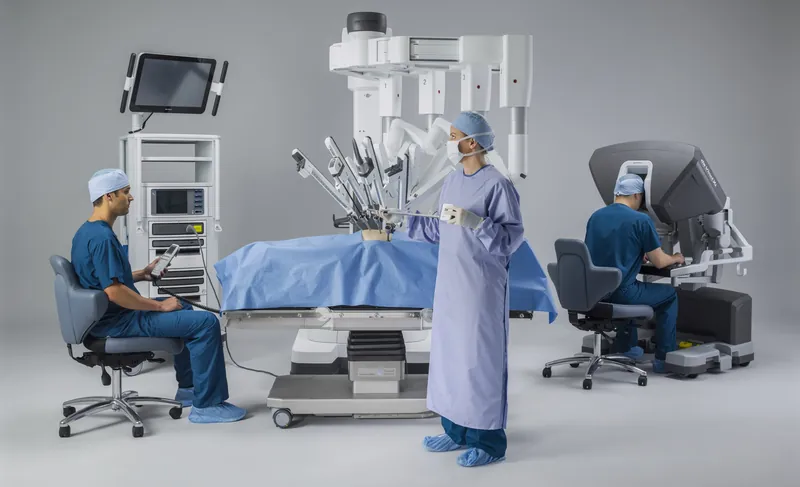
Robotic Surgery (Da Vinci Xi)
3D HD Vision: Surgeon sees the surgical field in a magnified, high-definition, three-dimensional view.
Wristed Instruments: Robotic instruments bend and rotate like a wrist to assist with suturing (stitching).
Tremor Filtering: The system filters natural hand tremor during delicate steps.
Small Incisions: Performed through small keyhole incisions.
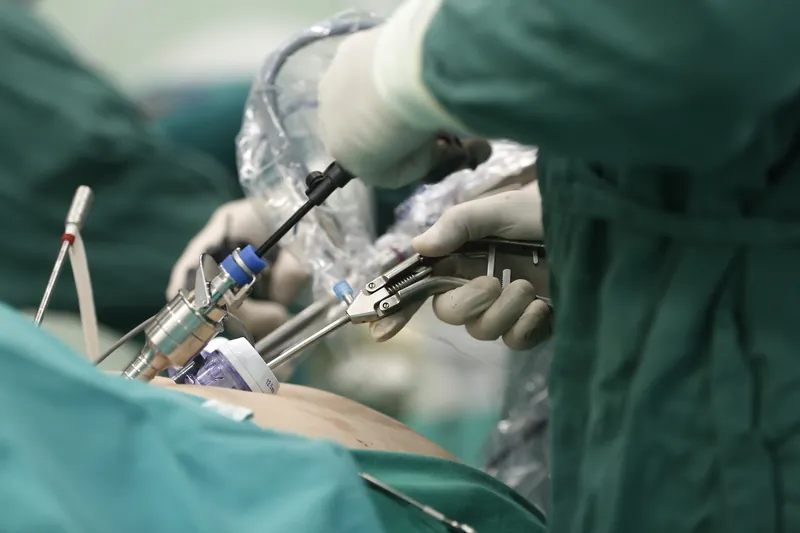
Laparoscopic Surgery
2D HD Vision: Surgeons view a high-definition, two-dimensional image on a monitor.
Straight Instruments: Long, straight instruments are used through small ports.
Long-Established: A widely used, well-established minimally invasive technique.
Small Incisions: Also performed through small keyhole incisions.
Types of Hysterectomy and Recovery Overview
Each type of hysterectomy varies based on how much of the uterus or surrounding organs are removed. Here’s a quick overview to help you understand the options and recovery timelines.
Total Hysterectomy
Removes the entire uterus along with the cervix. It’s the most common type, often done for fibroids, heavy bleeding, or uterine growths.
Hysterectomy with Oophorectomy
Involves removing the uterus along with one or both ovaries. It’s done when there’s a risk of ovarian cysts, endometriosis, or hormone-related problems.
Radical Hysterectomy
Removes the uterus, cervix, part of the vagina, and surrounding tissues. This is usually advised for early-stage cervical or uterine cancer.
What to Expect During Hysterectomy Surgery
Your Step-by-Step Care Journey
Consultation & Evaluation
Meet our gynecology team to discuss your symptoms, review reports and decide the most suitable treatment. We explain the procedure, cost and recovery before you proceed.
Surgery Day
The surgery is performed under general anesthesia using laparoscopic or robotic-assisted techniques. It usually takes 1–2 hours.
Post-Surgery Stay
Most patients stay in the hospital for 1–2 days for observation while our team monitors recovery. You’ll receive guidance on diet, wound care and medications to support healing.
Recovery & Follow-Up
Most women can resume light work within 2–3 weeks, depending on the type of hysterectomy performed. Follow-up visits check healing and help manage hormonal changes, if any.